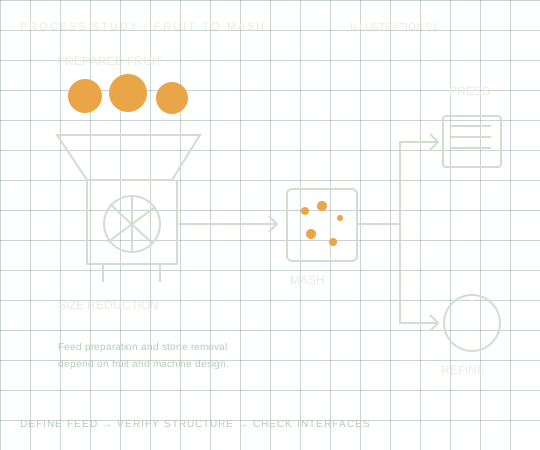
Record the fruit you actually receive
List variety, whole-fruit size range, maturity and the expected condition on arrival. Separate firm fruit from soft or overripe batches in your trial notes. State whether fruit is fresh, thawed, pre-cut or otherwise treated. Do not describe mixed seasonal deliveries with one ideal sample; select trial lots that represent the operating range.
Map sorting and washing separately
Identify how unsuitable fruit and foreign material are removed before size reduction. Show the inspection position, washing stage, rinse where required, and drainage on the flow drawing. Bertuzzi’s mango process describes washing followed by a dedicated separation route; it illustrates why preparation belongs in the line design rather than being an assumption at the crusher inlet.
Confirm what may enter the machine
Get written limits for maximum feed dimensions, hard inclusions and stones from the selected equipment supplier. A description such as “stone fruit” does not automatically mean that every crusher can safely process intact pits. For a stone-free product, agree where pit removal occurs and how the separated fraction is checked. Never substitute a generic guide for the machine’s feed restrictions.
Plan a controlled handover
Specify the feed height, whether delivery is continuous or intermittent, and how upstream delivery stops when downstream equipment is unavailable. The voran washing-and-mashing brochure describes a press-linked control arrangement as one manufacturer example. Your line needs its own agreed control sequence, including restart and fault handling.
Manufacturer references
Sources for the named equipment examples. General selection recommendations are our original planning guidance. Reviewed 10 September 2026.