Choose a repeatable observation method
Record photographs with a scale, a documented sampling point and the time elapsed after discharge. If your process team uses sieving or another particle assessment, agree the method before comparing machines. Keep fruit condition and sampling method consistent. A screen designation alone is not a complete description of irregular, fibrous fruit mash.
Record every setting that changes the trial
Bucher describes speed, discharge-slot width and knife size as adjustment factors on its CM50. voran describes interchangeable screens for its centrifugal mills. These are examples of different adjustment mechanisms, not interchangeable settings. Capture the actual configuration of each candidate and have its supplier explain the permitted adjustment range.
Evaluate the output at the next stage
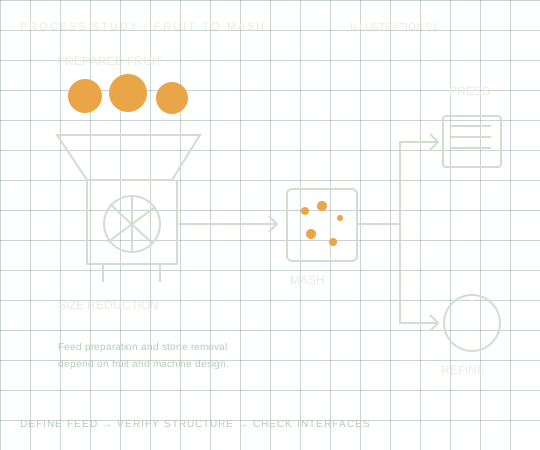
A finer appearance should not automatically count as a better result. Observe feed consistency, transfer behaviour, extraction or refining performance, and the quality attributes relevant to the final product. Compare the complete route under repeatable conditions. Any preferred setting should be supported by the agreed trial measurements rather than a visual impression alone.
Keep sample identity intact
Use one trial identifier across the incoming fruit record, crusher setup, collected mash and downstream observations. Note stops and changes during sampling. Retain the method and results so that the chosen configuration can be checked again with a different seasonal lot. Decide in advance who accepts the results and how a borderline run is repeated.
Manufacturer references
Sources for the named equipment examples. General selection recommendations are our original planning guidance. Reviewed 10 September 2026.