Physical connections
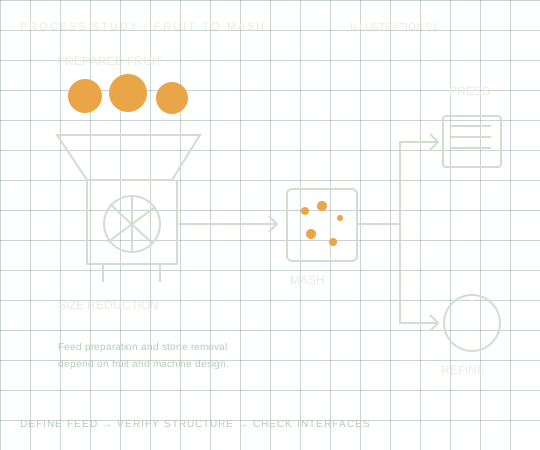
Document the crusher inlet height and opening, discharge position, support arrangement and maintenance clearance. For transfer, confirm the receiving vessel or pump inlet and the proposed connection details. Ask for coordinated drawings from both equipment suppliers. A nominal pipe size does not establish that a pump can transfer your particular mash.
Flow and buffer behaviour
Describe whether the press or pulper runs continuously, in batches or with periodic pauses. Ask how material delivery responds when the receiving stage stops. Define the working volume and control purpose of any buffer, together with cleaning and product-change arrangements. Avoid inventing a holding time; it needs to be agreed for the product and process.
Control responsibility
List the signals exchanged between equipment: ready to receive, running, stop request and fault state. Assign who designs, wires and tests each interface. Include the response to loss of power and restoration of service in the commissioning plan. The voran brochure shows one press-demand-controlled washing and milling arrangement; it is an example, not a universal control specification.
Acceptance across the boundary
Run a coordinated trial that includes the downstream equipment wherever practical. Watch for accumulation, unstable feeding and unplanned stops; record the conditions rather than attributing the problem immediately to one machine. Agree which supplier owns any corrective work, and how the integrated route will be retested before final acceptance.
Manufacturer references
Sources for the named equipment examples. General selection recommendations are our original planning guidance. Reviewed 10 September 2026.